Dental Bridges vs Implants France
Losing a tooth can significantly impact not only the aesthetics of your smile but also your oral health and overall quality of life. The gap left by a missing tooth can lead to a cascade of problems, including difficulty chewing, speech impediments, shifting of adjacent teeth, and even bone loss in the jaw. Fortunately, modern dentistry offers highly effective solutions to restore missing teeth, with two primary options standing out: dental bridges and dental implants. While both aim to fill the void and restore functionality, they differ substantially in their approach, benefits, and long-term implications. Understanding these differences is crucial for making an informed decision that best suits your individual needs and oral health goals.
Dental Bridges vs Implants France
Understanding Tooth Loss and Its Impact
When a tooth is lost, the consequences extend beyond a visible gap. The jawbone that once supported the tooth root begins to resorb, or waste away, due to lack of stimulation. This bone loss can weaken the jaw structure, alter facial aesthetics, and even put surrounding teeth at risk. Adjacent teeth may shift into the empty space, disrupting your bite and leading to further dental problems like misalignment, increased wear, and susceptibility to decay and gum disease. Replacing a missing tooth is therefore not merely a cosmetic concern but a vital step in preserving your oral health integrity.
Dental Bridges: A Traditional Solution for Missing Teeth
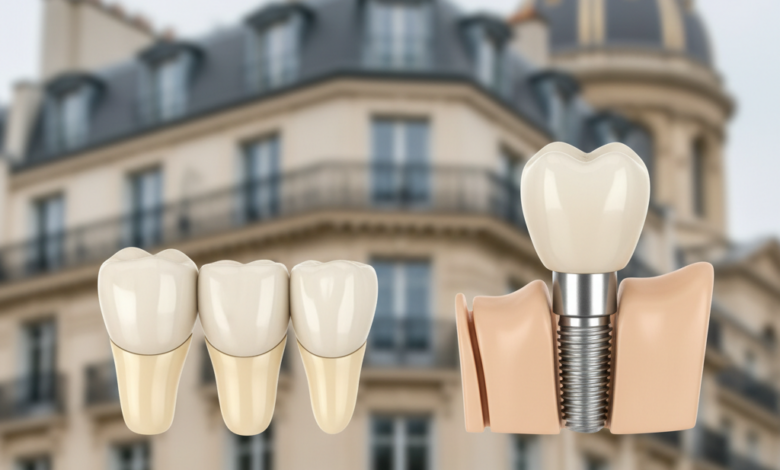
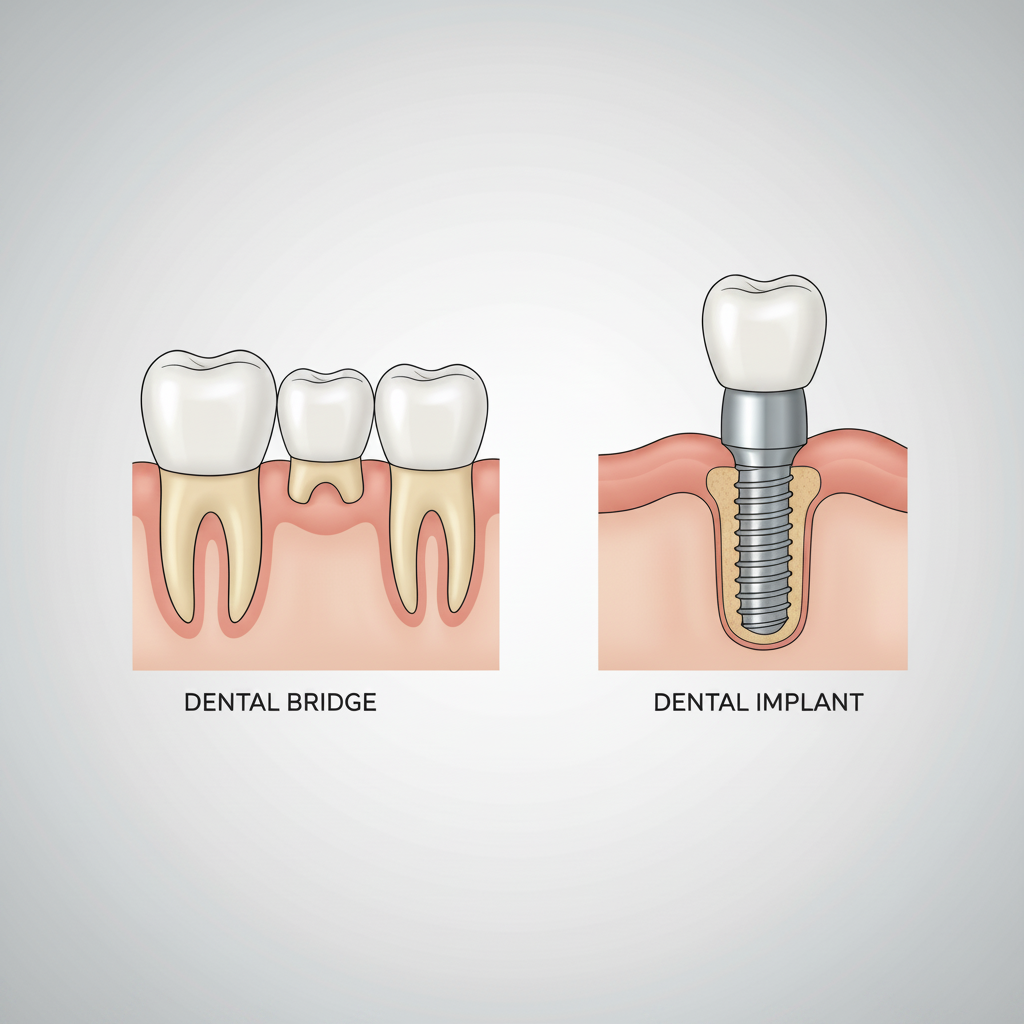
A dental bridge is a traditional prosthetic device designed to “bridge” the gap created by one or more missing teeth. It typically consists of one or more artificial teeth (pontics) held in place by dental crowns that are cemented onto the natural teeth adjacent to the gap (abutment teeth). This restoration literally creates a bridge over the empty space, restoring chewing function and preventing other teeth from drifting out of alignment.
There are several types of dental bridges:
- Traditional Bridges: The most common type, involving crowns on the adjacent natural teeth to support the pontic.
- Cantilever Bridges: Used when there are only adjacent teeth on one side of the missing tooth.
- Maryland Bonded Bridges (Resin-Bonded Bridges): These use a metal or porcelain framework bonded to the back of the adjacent teeth, rather than requiring full crowns. They are less invasive but generally less strong.
The procedure for a traditional bridge typically involves two appointments. During the first visit, the abutment teeth are prepared by removing a portion of enamel to make room for the crowns. Impressions of your teeth are then taken to create a precise model for the bridge in a dental laboratory. A temporary bridge is usually placed to protect the prepared teeth. On the second visit, the permanent bridge is carefully fitted and cemented into place.
Benefits of Dental Bridges
- Faster Treatment: The entire process for a dental bridge can often be completed within a few weeks.
- Less Invasive: While it requires altering adjacent teeth, it avoids surgical procedures in the jawbone.
- Cost-Effective (Initially): The upfront cost of a dental bridge is often lower than that of a single dental implant.
- Aesthetic Improvement: Bridges effectively fill the gap, restoring the appearance of your smile.
Drawbacks of Dental Bridges
- Damage to Healthy Teeth: The biggest disadvantage is the need to grind down healthy adjacent teeth to accommodate the crowns, which can weaken them and make them more susceptible to decay or nerve damage over time.
- No Bone Stimulation: Unlike implants, bridges do not stimulate the jawbone beneath the missing tooth. This can lead to continued bone resorption in that area, potentially changing facial structure and weakening the support for the bridge over many years.
- Shorter Lifespan: Bridges typically last 5-15 years, requiring eventual replacement.
- Maintenance Challenges: Cleaning under the pontic can be difficult, requiring special tools like floss threaders to prevent plaque buildup and gum disease.
Dental Implants: The Modern Gold Standard for Tooth Replacement
Dental implants are widely considered the most advanced and effective long-term solution for replacing missing teeth. An implant is a small, screw-shaped post, typically made of biocompatible titanium, which is surgically placed into the jawbone beneath the gum line. This post acts as an artificial tooth root. Once integrated with the bone (a process called osseointegration), an abutment is attached to the implant, and finally, a custom-made crown is placed on top, providing a complete, natural-looking, and fully functional tooth replacement.
The dental implant procedure typically involves several stages and a longer overall timeline. First, a comprehensive examination and imaging (X-rays, 3D scans) are performed to assess bone quality and plan the implant placement. The implant post is then surgically placed into the jawbone. A healing period of several months follows, during which the implant fuses with the bone. Once osseointegration is complete, a second minor surgery may be required to expose the top of the implant and attach the abutment. Finally, a custom dental crown, meticulously designed to match your natural teeth, is affixed to the abutment. For a detailed guide on the procedure, you can visit a page like Dental Implant Procedure France: Step-by-Step.
Benefits of Dental Implants
- Preserves Jawbone: Implants are unique in that they stimulate the jawbone, preventing bone loss and preserving the integrity of your facial structure.
- No Impact on Adjacent Teeth: Implants stand alone and do not require modification of healthy surrounding teeth, protecting their long-term health.
- Exceptional Longevity: With proper care, dental implants can last a lifetime, making them a highly durable and cost-effective solution in the long run.
- Natural Look and Feel: Implants integrate with your jawbone, offering unparalleled stability, comfort, and aesthetics, often feeling just like your natural teeth.
- Improved Oral Health: Easier to clean than bridges, reducing the risk of gum disease and decay.
- High Success Rate: Dental implants boast a success rate of over 95%, making them a highly reliable treatment option. For more scientific information, refer to this Wikipedia article on Dental Implants.
Drawbacks of Dental Implants
- More Invasive: The procedure involves oral surgery, which may not be suitable for all patients, especially those with certain medical conditions.
- Longer Treatment Time: The entire process, including healing and osseointegration, can take several months, or even up to a year in complex cases.
- Higher Initial Cost: The upfront investment for a dental implant is generally higher than for a bridge.
- Specific Candidacy Requirements: Patients need sufficient bone density and good general health to be eligible for implants.
Dental Bridges vs Implants: A Detailed Comparison
Choosing between a dental bridge and an implant involves weighing several critical factors. The following table provides a clear comparison of their key characteristics:
| Feature | Dental Bridge | Dental Implant |
|---|---|---|
| Procedure | Involves preparing (grinding down) adjacent healthy teeth; non-surgical. | Surgical placement of a titanium post into the jawbone; no modification of adjacent teeth. |
| Impact on Adjacent Teeth | Requires alteration of healthy teeth, which are then crowned. | No impact on surrounding natural teeth. |
| Bone Health Preservation | Does not stimulate jawbone; bone loss can continue underneath the pontic. | Stimulates jawbone, preventing bone loss and preserving facial structure. |
| Longevity | Typically lasts 5-15 years, requiring eventual replacement. | Can last a lifetime with proper care (often 20+ years). |
| Aesthetics & Feel | Good aesthetic outcome, but may not feel as natural as an implant. | Excellent, natural look and feel, functions like a natural tooth. |
| Maintenance | Requires special cleaning tools (floss threaders) to clean beneath the bridge. | Maintained like a natural tooth with regular brushing and flossing. |
| Treatment Time | Relatively fast (typically 2-4 weeks). | Longer (3-9 months or more, including healing and osseointegration). |
| Initial Cost | Generally lower upfront cost. | Higher initial cost. |
| Long-Term Value | Lower initial cost, but potential for higher cumulative costs due to replacement and potential complications. | Higher initial cost, but higher long-term value due to durability and bone health benefits. |
Who is a Candidate for Each Option?
The ideal treatment depends heavily on individual circumstances, including overall health, bone density, the number and location of missing teeth, and budget.
When a Bridge Might Be Preferred:
- If the adjacent teeth already need crowns or have significant fillings, making the preparation for a bridge less detrimental.
- If a patient desires a faster treatment outcome.
- If a patient has insufficient jawbone density for an implant and is unwilling or unable to undergo bone grafting.
- If medical conditions preclude surgery.
When an Implant is the Superior Choice:
- When healthy adjacent teeth should be preserved.
- For patients seeking the most natural look, feel, and function.
- For those looking for a long-term, durable solution that prevents bone loss.
- When replacing a single tooth, an implant is often the most conservative option as it doesn’t affect other teeth.
- For patients with good oral health and sufficient bone density.
The Procedure Journey: What to Expect
Regardless of your choice, the journey begins with a thorough consultation with your dentist. This initial assessment involves a detailed examination of your oral health, X-rays, and possibly 3D scans to evaluate the bone structure and surrounding teeth. Your dentist will discuss your medical history, lifestyle factors, and expectations to determine the most suitable treatment plan.
For bridges, the main procedural steps include tooth preparation, impression taking, temporary bridge placement, and final cementation. Recovery is typically minimal, with some initial sensitivity or soreness that subsides quickly.
For implants, the process is more surgical. After implant placement, a crucial healing phase called osseointegration begins, where the implant fuses with your jawbone. This can take several months. During this time, a temporary restoration might be provided. Once healing is complete, the abutment and final crown are placed. Post-surgical care for implants involves pain management, avoiding certain foods, and strict oral hygiene.
Longevity and Maintenance
The longevity of both bridges and implants largely depends on diligent oral hygiene and regular dental check-ups. Bridges, while durable, can fail if the abutment teeth suffer from decay or gum disease. Meticulous cleaning, including the use of special brushes and floss threaders, is essential to keep the area around and under the bridge free of plaque.
Dental implants, because they are integrated into the bone, are remarkably stable and resistant to decay. However, the crown attached to the implant is still susceptible to wear and tear, and the gum tissue around the implant can be prone to peri-implantitis (a form of gum disease specific to implants) if not cleaned properly. Regular brushing, flossing, and professional cleanings are paramount to ensure the long-term success of your implant. With proper care, the implant post itself can last a lifetime, though the crown might need replacement after 10-15 years.
Cost Considerations
The cost of dental treatment is a significant factor for many patients. As mentioned, dental bridges generally have a lower initial cost compared to dental implants. However, it’s essential to consider the long-term financial implications. Bridges may need to be replaced every 5-15 years, and there’s a potential for additional costs if the abutment teeth develop issues. Over a lifetime, the cumulative cost of multiple bridge replacements could potentially exceed the cost of a single implant. Dental implants, with their significantly longer lifespan and bone-preserving benefits, often represent a better long-term investment in oral health. Factors influencing cost include the number of teeth being replaced, the materials used, the complexity of the case, and any additional procedures like bone grafting.
Making the Right Choice for Your Smile
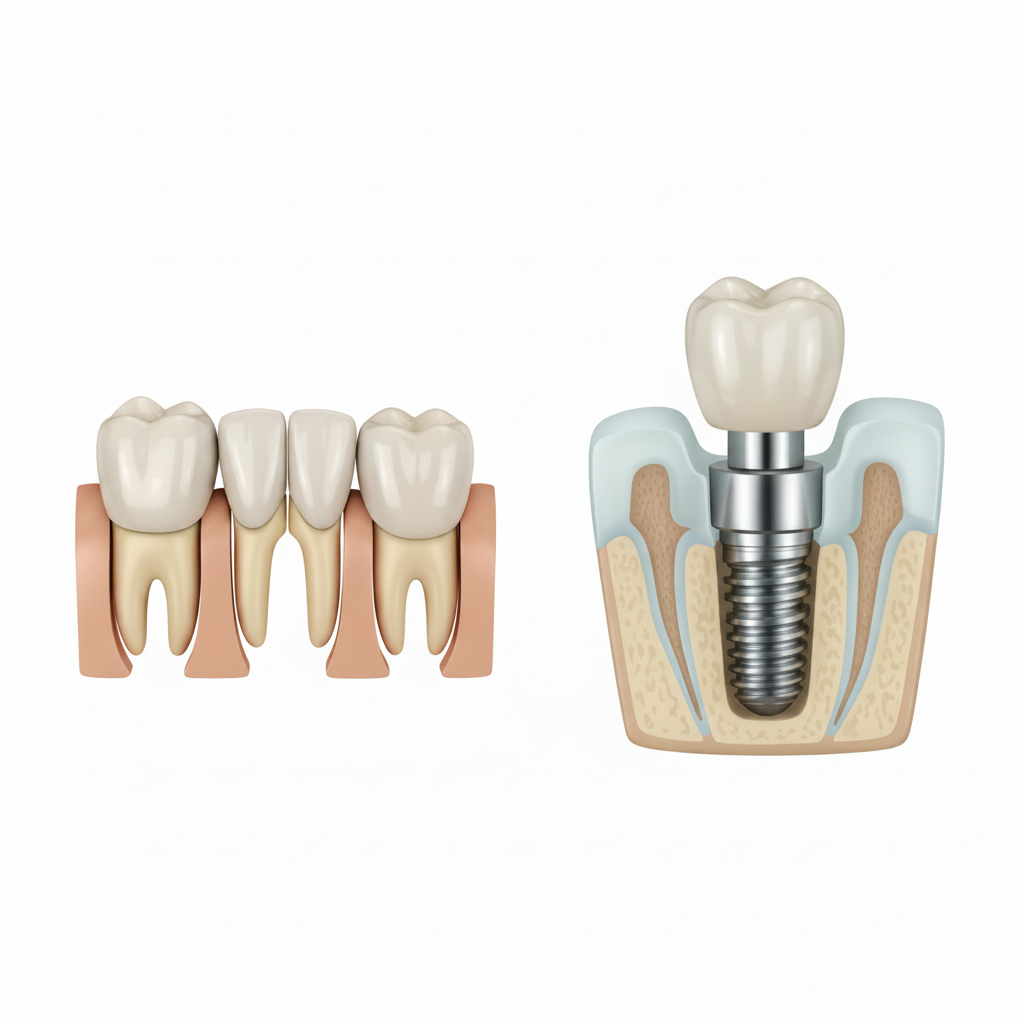
Deciding between a dental bridge and a dental implant is a personal choice that should be made in close consultation with a qualified dental professional. Both options effectively address missing teeth, but they do so with different philosophies and outcomes. Dental implants offer a superior long-term solution that mimics natural teeth, preserves bone, and maintains the health of adjacent teeth. Dental bridges, while a more traditional and sometimes faster option, come with the trade-off of affecting healthy teeth and not addressing bone loss. Your dentist can provide a comprehensive assessment, discuss the pros and cons in the context of your unique oral health profile, and help you select the treatment that will provide the best results for your smile, health, and well-being.